🧪 Food Science: Non-Crystalline Glazes & Chemical Aeration
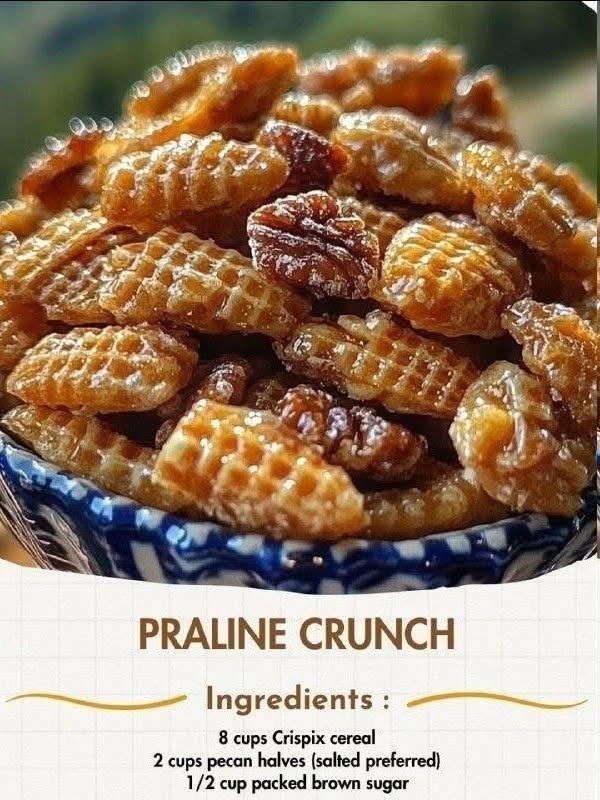
The Non-Crystalline Caramel Shield: Sucrose (found in brown sugar) naturally re-crystallizes into hard, grainy structures when boiled and cooled. Introducing light corn syrup (glucose) prevents this: long-chain glucose molecules physically interfere with sucrose crystals, forcing the glaze to set into a smooth, glossy, uniform glass-like coating instead of a gritty sugar paste.
Baking Soda Foaming Reaction: Stirring baking soda (sodium bicarbonate) into the hot, acidic brown sugar and butter reduction triggers an immediate acid-base reaction. Thermal heat releases carbon dioxide ($\text{CO}_2$) gas bubbles inside the heavy syrup, causing the mixture to foam and expand. When poured over the cereal, these micro-bubbles create a thin, aerated structural wall rather than a solid candy shell, yielding a delicate snap.
Low-Temperature Moisture Evaporation: Baking the coated mix at a low $250^\circ\text{F}$ ($120^\circ\text{C}$) drives off remaining free water molecules without scorching milk solids in the butter or over-cooking the sugars. This ensures the praline coating hardens into a crisp, non-sticky glaze that seals the cereal against atmospheric humidity.
Step-by-Step Instructions:
For Complete Cooking STEPS Please Head On Over To Next Page Or Open button (>)